High-Performance Water Treatment in Nigeria for Homes, Estates & Commercial Facilities
In Nigeria’s industrial and residential sectors, achieving consistent water quality is a significant engineering challenge. From borehole contamination to high turbidity, salinity, and bacterial presence, untreated water poses serious risks to health, infrastructure, and operations—especially in residential estates, hotels, hospitals, and offices.
At RP Facilities Limited, we have worked extensively across Lagos and other parts of Nigeria, designing, construction and maintaining water treatment and reverse osmosis (RO) systems.
Understanding High-Performance Water Treatment in Nigeria
Most water sources in Nigeria—particularly boreholes—contain:
- High iron and manganese
- Turbidity (suspended particles)
- Bacterial contamination (coliform)
- Hardness and dissolved salts (TDS)
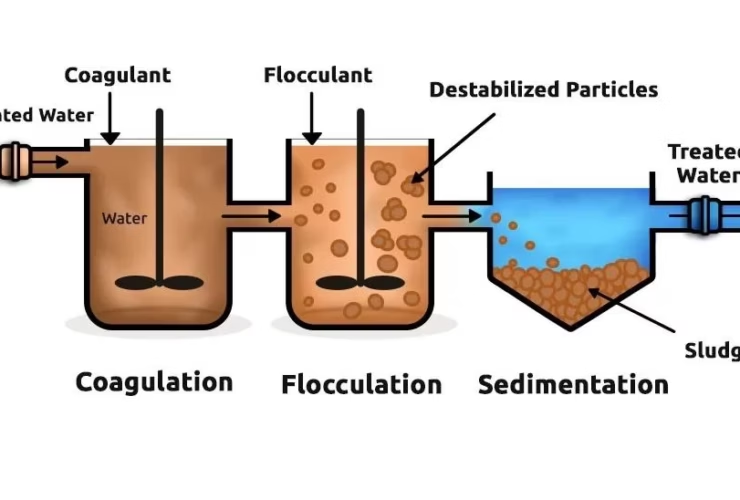
A properly designed Water Treatment Plant (WTP) typically includes:
- Chemical Dosing (Pre-treatment)
- Aeration and Sedimentation
- Filtration (Sand + Carbon)
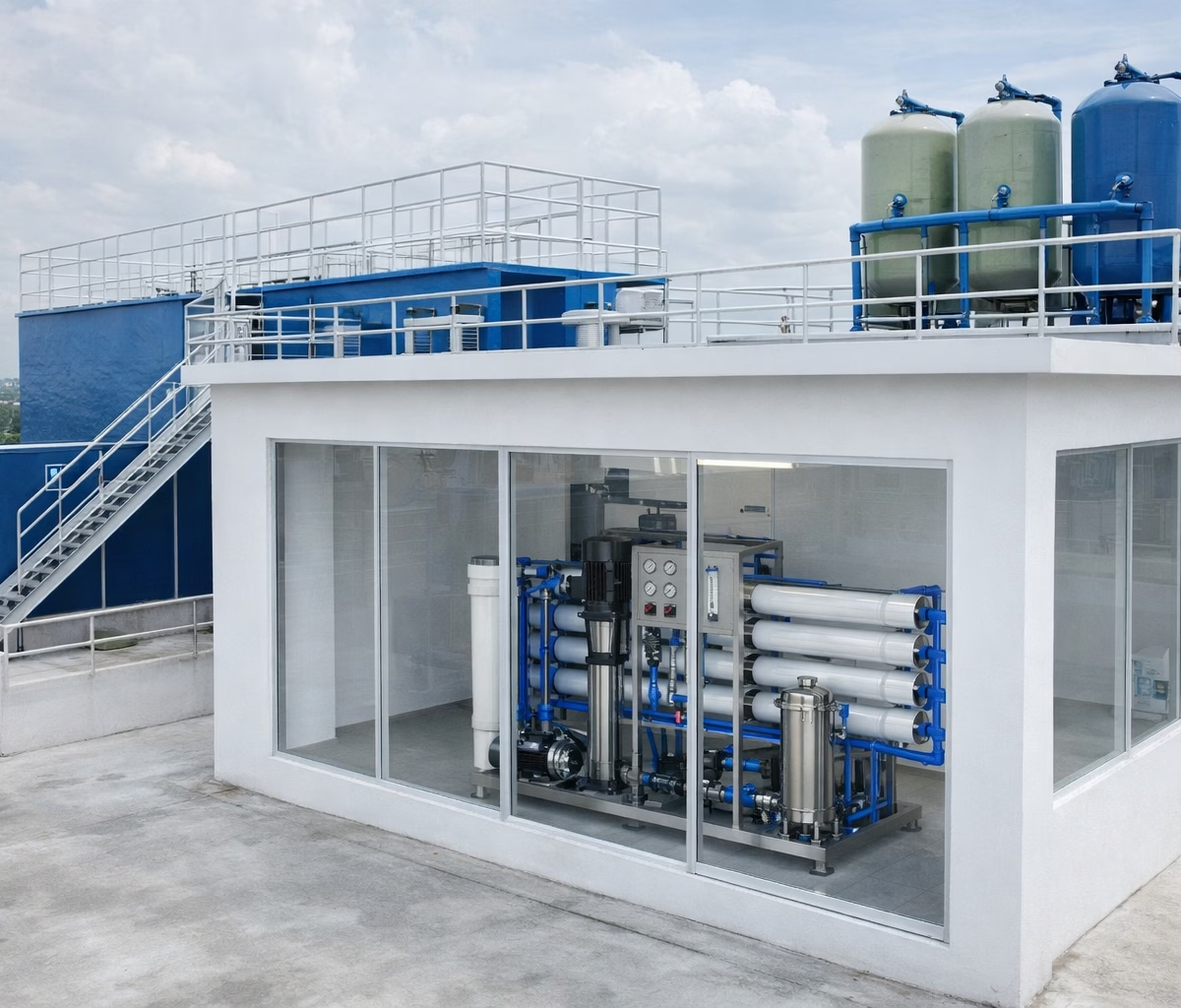
- Reverse Osmosis (where required)
- Disinfection and Storage
Each stage is critical. Skipping or poorly implementing any stage leads to system failure.
Reverse Osmosis Systems: Why They Are Essential
Reverse Osmosis (RO) is the most effective method for removing:
- Dissolved salts (TDS)
- Heavy metals
- Bacteria and viruses
- Odor and taste
Typical Applications of Reverse Osmosis Systems in Nigeria:
- Residential estates with poor borehole quality
- Hotels and serviced apartments
- Hospitals and laboratories
- Industrial and data center cooling systems
FRP Vessels in Water Treatment: The Preferred Choice?
What Are FRP Vessels?
FRP (Fiber Reinforced Plastic) vessels are pressure tanks used in filtration systems to house media such as:
- Multigrade sand
- Activated carbon
- Resin
- pH correction media (e.g., calcite, akdolite)
Why FRP Vessels Are Widely Used in Nigeria
1. Lightweight and Durable
FRP vessels are about one-third the weight of steel tanks, making them easier to transport and install, especially in tight plant rooms or elevated positions.
2. Corrosion Resistance
Unlike mild steel, FRP does not rust—making it ideal for Nigeria’s humid and saline environments (e.g., Lekki, Victoria Island).
3. High Pressure Performance
- Operating Pressure: up to 150 psi (10.5 bar)
- Burst Pressure: up to 600 psi
- Cycle Testing: up to 250,000 cycles
This ensures long-term durability under continuous operation.
4. Temperature Tolerance
- Operating range: 1°C to 50°C
- Suitable for most Nigerian water conditions
Common FRP Vessel Sizes and Applications
| Model | Volume (Liters) | Typical Use |
|---|---|---|
| 13 x 54 | 103 L | Small residential filtration |
| 16 x 65 | 188 L | Duplex apartments |
| 18 x 65 | 237 L | Medium estates |
| 21 x 62 | 312 L | Commercial buildings |
| 24 x 72 | 415 L | Hotels / schools |
| 30 x 72 | 640 L | Industrial pre-treatment |
| 36 x 72 | 850 L | Large WTP systems |
High-Performance Water Treatment in Nigeria for Homes, Estates & Commercial Facilities
How to Choose the Right FRP Vessel
Choosing the right vessel depends on:
1. Flow Rate (m³/hr)
Higher flow = larger vessel diameter
2. Media Type
- Sand filters require deeper beds
- Carbon filters need longer contact time
- Resin requires proper expansion space
3. Application Type
- Residential vs commercial vs industrial and the quality of raw water.
4. Available Space
FRP vessels come in multiple height/diameter combinations for flexibility.
Field Experience: Common Problems in Nigeria
From our projects across Lagos, we consistently observe the following issues:
1. Improper Dosing Systems
Many facilities install dosing units but:
- Do not calibrate them
- Use wrong chemical concentrations
- Operate without agitators
Result: Poor coagulation, ineffective disinfection, and bacterial contamination.
2. Wrong Vessel Sizing
Using undersized FRP vessels leads to:
- High flow velocity
- Poor filtration
- Media washout
3. Media Failure
Common causes:
- No backwashing routine
- Low-quality media
- Mixing incompatible media
Result: Turbidity breakthrough and odor persistence.
4. Poor Drainage Design
In many WTP rooms:
- Backwash water floods the area
- No proper drainage lines
- Equipment sits in water
Result: Electrical hazards and equipment failure.
5. Lack of Automation
Absence of:
- Level sensors
- Float switches
- Pump protection
Leads to:
- Pump burnout
- Tank overflow
- Flooding
User Experience: What Clients Typically Report
From residential estates and commercial facilities:
“Water still smells even after treatment”
→ Usually caused by exhausted carbon or poor chlorination
“Filters get dirty too quickly”
→ Due to poor pre-treatment or no sedimentation stage
“RO system keeps failing”
→ Feed water not properly filtered before RO
“Water pressure drops over time”
→ Media clogging and lack of backwash
Best Practice for a Reliable Water Treatment System
At RP Facilities Limited, we recommend:
✔ Proper System Design
- Always include aeration + sedimentation
- Do not rely only on small tanks
✔ Correct FRP Vessel Selection
- Size based on flow rate, not guesswork
✔ Quality Media
- Multigrade sand
- Activated carbon
- pH correction media
✔ Automated Controls
- Level sensors
- Pump protection
- Central control panel
✔ Regular Maintenance
- Backwashing schedule
- Media replacement
- Chemical dosing checks
Conclusion
Water treatment in Nigeria requires more than just installing equipment—it requires proper engineering, correct material selection, and ongoing maintenance.
FRP vessels play a critical role in modern water treatment systems due to their durability, efficiency, and adaptability. When combined with well-designed dosing, filtration, and reverse osmosis systems, they ensure safe, clean, and reliable water supply.
Need a High-Performance Water Treatment in Nigeria for Homes, Estates & Commercial Facilities?
Contact RP Facilities Limited today for:
- Site inspection
- Water analysis
- System design and upgrade
Email: rpfacilities1@gmail.com
Phone: 08085854001
#watertreatent #estatewatertreatment #reverseosmosissystem #lagoswatertreatment